
When I set out to learn to fly at the age of 13, I did not actually want to learn to fly. I wanted to be a pilot, and if I could have snapped my fingers and instantly acquired all the necessary skills and knowledge, I would have. I am sure I am not alone in this; I have since met many would-be pilots entranced by the idea of flying their own shiny new Baron to the Bahamas but markedly less enthusiastic about the prospect of first guiding an aging Cessna to Duluth. To the uninitiated, flight training must seem an unnecessarily arduous and repetitive process, complete with thick textbooks and written exams. And then there are the vagaries of weather and maintenance and the frustration of lining up one’s schedule with that of the airplane and instructor.
Taking Wing: Struggles and Rewards of Learning to Fly
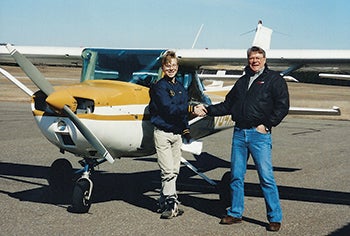
Jerry Graham, congratulates me on surviving
my first solo and an equally harrowing case of
headset hair. Sam Weigel

Key Takeaways:
- The author initially underestimated flight training, finding it disorienting, difficult, and frustrating despite prior exposure, experiencing airsickness and plateaus in skill development.
- While eventually finding satisfaction and confidence in mastering flying skills, this led to hubris, which aviation promptly exposed through a series of dangerous errors, teaching the author about humility and breaking the chain of mistakes.
- Ultimately, learning to fly is presented not just as acquiring a skill but as a deeply challenging and transformative personal journey that fosters self-discovery, resilience, and a profound sense of accomplishment.
Key takeaways sponsored by Aviator Pro | Start Your Training ->
See a mistake? Contact us.